Coffee


Varieties Of Coffee
The world of coffee hosts a variety of types, and these types vary according to different geographic regions and growing conditions. The soil and climatic conditions of the Northwest region provide a highly suitable environment for the cultivation of certain coffee varieties.
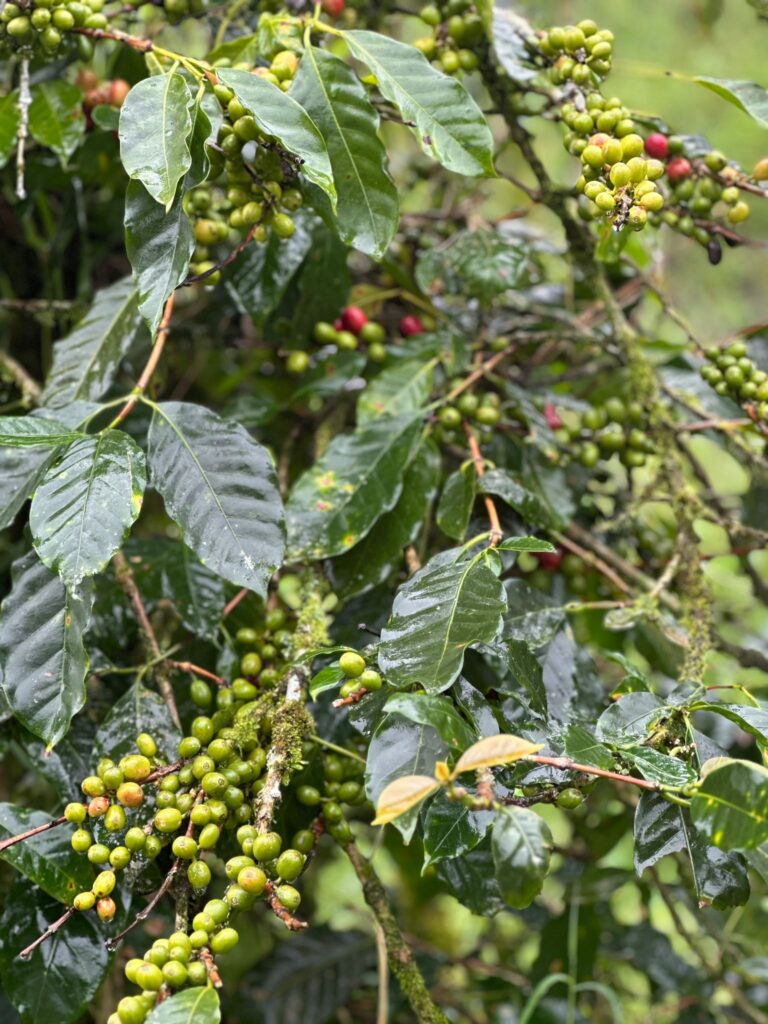
Some of the coffee varieties that MULATA has identified as most suitable for the soils and climatic conditions of the Northwest region include:
OBATA
A hybrid coffee variety. Typically known for its high yield and resistance to diseases. OBATA coffee usually has a full body and a robust flavor profile.
CATUAÍ
Another popular coffee variety, known for its high yield, short stature, and fast maturation period. It generally has a medium acidity and a balanced flavor profile.

ICATÚ
Generally recognized for its high yield and resilience, characterized by fruity flavors and low acidity.
LEMPIRA
A variety grown in Honduras, named after the national currency of Honduras. This variety generally has medium acidity and a balanced flavor profile. LEMPIRA coffee is usually characterized by sweet, slightly fruity, and chocolatey notes.
Coffee Profiles
Distinguished Coffee Varieties of the Central Zone:
The Central Zone, located in the Santa Barbara department of Honduras, is renowned for cultivating famous coffee varieties. The coffees grown in this region are recognized for their unique flavor profiles and high quality.
Here are some of the leading coffee varieties from the Central Zone:
- San Antonino: One of the most cherished varieties of the Central Zone, San Antonino coffee is characterized by medium acidity balanced with caramel and fruity flavors. This coffee offers a sweet balance with distinct chocolate and caramel notes.
- En Naranjo: One of the most original coffee varieties of the Central Zone, En Naranjo offers a perfect balance between sweetness and acidity, typically characterized by caramel and chocolate notes. En Naranjo coffee provides a satisfying and enjoyable drinking experience.
- El Ermitaño: A rare but valuable variety of the Central Zone, El Ermitaño coffee offers a flavor profile enriched with caramel, chocolate, and fruity flavors. Known for its high quality and unique taste, El Ermitaño coffee is highly regarded.
Cup Profile:
Coffees grown in the Copa del Higo mountain, Cerro Grande, and La Cieneguita mountain ranges in the municipalities of Macuelizo, Azacualpa, Nueva Frontera of the Santa Barbara department are cultivated at altitudes ranging from 900 to 1200 meters above sea level. These high-altitude coffees are characterized by chocolate fragrances and provide a fresh and pleasant environment to the coffee cup.
Flavor Profile:
These coffees typically include flavors of caramel, chocolate, and fruity notes. With medium acidity, these coffees offer a perfect balance between sweetness and acidity. They are also noted for their lingering aftertaste.
Harvest Period:
These quality HG coffees are usually harvested between November and February. During this period, the coffee beans reach optimum maturity and the best flavor profile is obtained.
These distinguished coffee varieties from the Central Zone represent the rich coffee heritage of Honduras and offer coffee enthusiasts a memorable drinking experience.
Distinguished Coffee Varieties of Santa Barbara:
Santa Barbara, one of Honduras’s important coffee regions, is renowned for cultivating famous coffee varieties. The coffees produced in this region are recognized for their unique flavor profiles and high quality. Here are some of the leading coffee varieties from Santa Barbara:
- El Corozal: One of Santa Barbara’s most loved coffee varieties, El Corozal is characterized by a balance of sweetness and fruity notes. This coffee has a long and pleasant aftertaste and offers coffee lovers an unforgettable drinking experience.
- Monte Cristo: Monte Cristo coffee, one of Santa Barbara’s unique and flavorful varieties, usually has a full body and creamy texture. Its flavor profile is typically characterized by sweetness, mild acidity, and a pleasant finish.
- La Palca: A rare but valuable variety of Santa Barbara, La Palca coffee is often defined by its red apple flavor and offers a perfect balance between sweetness and mild acidity. La Palca coffee leaves a long and pleasant aftertaste and is a favorite among coffee aficionados.
Cup Profile:
SHG quality coffee is produced in the high mountains of the El Volcán y Guijo mountain range, located in the Trinidad municipality of Santa Barbara, at altitudes ranging from 1200 to 1400 meters above sea level. These high-altitude coffees are characterized by exquisite fragrances of red fruits and honey.
Flavor Profile:
These coffees typically have a red apple flavor and offer a perfect balance between sweetness and mild acidity. They are also very juicy and have a creamy body, leaving a long and pleasant aftertaste.
Harvest Period:
These SHG quality coffees are usually harvested between December and March. During this period, the coffee beans reach optimum maturity, and the best flavor profile is obtained.
Santa Barbara’s distinguished coffee varieties represent the rich coffee heritage of Honduras and offer coffee enthusiasts a memorable drinking experience.
Santa Teresa Coffee: Unique Flavor of the Rio Hondo Micro-basin
Cup Profile:
Santa Teresa Coffee is a special quality coffee grown near the Rio Hondo micro-basin and the Güisayote Biological Reserve, located in the San Francisco del Valle municipality of Ocotepeque. Grown at an average altitude between 1300 to 1500 meters above sea level, this coffee possesses a special flavor profile. Known for its unique aromas of caramel granules, citrus, honey, and peach, this special flavor profile is balanced by the coffee’s very juicy texture, medium acidity, and lingering aftertaste.
Harvest Period:
Santa Teresa Coffee is typically harvested between January and March. During this period, the coffee beans reach optimum maturity and the best flavor profile is obtained. Freshly harvested beans provide coffee drinkers with a fresh and aromatic experience.
Santa Teresa Coffee, grown in the rich soils of the Rio Hondo micro-basin and matured in the high-altitude regions near the Güisayote Biological Reserve, represents a significant part of Honduras’s coffee heritage with its unique aromas of caramel, citrus, and honey.
Vallecillos Coffee: A Special Flavor Born in the Quebraditas Mountains
Cup Profile:
Vallecillos Coffee is a specialty coffee grown in the mountains of Quebraditas, near the Comayagua National Park (PANACOMA) in the Talanga municipality of Francisco Morazán. Grown at altitudes ranging from 1400 to 1650 meters above sea level, this coffee is shaped by the region’s unique climatological conditions. These conditions impart exquisite floral fragrances like jasmine and orange blossom to a cup of coffee, along with flavors of tropical fruits such as grapes and blueberries. Vallecillos Coffee has refined acidity, a creamy and round body, and a long-lasting aftertaste, often complemented by notes of rose tea.
Harvest Period:
Vallecillos Coffee is typically harvested between January and April. During this period, the coffee beans reach optimum maturity, and the best flavor profile is obtained. Freshly harvested beans provide coffee drinkers with a unique and aromatic experience.
Vallecillos Coffee, grown in the Quebraditas mountains and influenced by the region’s unique climatic conditions, enriches with floral scents and tropical fruit flavors, forms a part of Honduras’s rich coffee heritage, and offers coffee enthusiasts an unforgettable flavor experience.
Quality Control
CUPPING
Considering that the cupping process is one of the most important, since it is the area in charge of inspecting, managing and controlling the quality in each of the processes to avoid errors that have a negative impact on the quality of the product and therefore its value in the market.
That is why MULATA has the team and highly qualified personnel with many years of experience in the field, to guarantee quality and consistency in our products.
The following analyses are carried out in this department:
- Physical Analysis (Green Coffee).
- Particle size analysis.
- Roast Analysis (Roasted Coffee).
- Sensory Analysis (Tasting).
Specialty Coffee Tasting
The cupping process consists of evaluating all the organoleptic characteristics of the coffee and evaluating the following parameters to identify its quality.
Aroma
Initially, we smell the ground roasted coffee already dosed in bowls, which allows us to know the qualities that a cup of coffee could have, whether positive or negative, which we will check throughout the process.
Acidity
It’s a complex characteristic in coffee, not to be confused with sour. It is the life-giving and cleansing property of the palate. It is experienced in the dryness that the liquid produces at the edges of the tongue, and gives its flavor marked qualities; Without enough acidity, coffee tends to be flat, this characteristic influences the coffee to mark its attributes.
Generally, the acidity of coffee varies according to the altitude above sea level, the nutrition of the plant and the micro-climates also influence the process of harvesting, wet processing and drying of the coffee.
Body
The body refers to the consistency and permanence of coffee in the mouth, the viscosity, weight and thickness with which it is perceived on the tongue. This characteristic is related to the oils and substances that are extracted during the treatment of the grain. It can range from light to strong or intense.
Taste
It refers to the overall impression of aroma, acidity and body. Acidity, aroma, and body shape the flavor of coffee. It is the relationship between these three factors that makes a given coffee more or less enjoyable. Typical flavor characteristics are: richness, range, complexity and balance.
Richness
Richness describes an interesting and satisfying wholeness. Range refers to the concentration of distinctive notes in relation to complexity, and complexity refers to the possibilities of coffee that are revealed at different points in the tasting with a final sense of balance. Balance is another difficult term, it must have enough complexity without one feature overwhelming the others.
Aftertaste
Aftertaste is a relatively new term in coffee cupping. Brought to you by wine connoisseurs, it describes the immediate sensation after coffee is swallowed. Some coffees develop at the end, changing nicely. A spicy tone can be tempered and veer to cocoa or chocolate in the finish, or an overly dry undertone can be sweetened at the end.
Qualities
Bright, dry, sharp, caramelized, chocolatey, delicate, earthy, fragrant, fruity, floral, ripe, sweet, wild, almondy, spicy; All of these terms are appropriate to refer to what is desirable in a café.
Bitter, dead, dirty, flat, fatty, sour, thin, hard, muddy, stale, rough, rubbery, watery; On the other hand, they don’t speak well of a cup of coffee.
Technical Assistance
Currently technical assistance is provided to different crop producers in the implementation of new lots, which includes:
- Layout of the lot.
- Shade management
- Nutrition of plantations.
- Pest and disease control
Organic Inputs
One of the main problems in coffee farming is the management of the by-products of the processing process; it is important to mention that coffee has many by-products that can be used to improve the productivity of the crop. MULATA promotes the management of these products, providing its members with products of organic origin, including Vermicompost.
Compost can be defined as the result of a process of humification of organic matter, under controlled conditions, becoming a rich nutrient for the soil; It is an excellent organic fertilizer with high phosphorus, nitrogen and potassium content, making it the best food for your plants, it is 100% natural.
It can be applied directly to the soil, as fertilizer, vegetable gardens, etc.
Elaboration Process
Worm castings are the product of recycling coffee pulp waste by means of Californian worms; The process must be carried out in piles of 1.25 m wide by 0.40 m high, applying cold pulp with a thickness of 30 centimeters, for each pile there must be two kilos of worms; During the process we must control the humidity, temperature and regulate the pH until its completion, this process has an average of two and a half months of decomposition.
Like the pulp, other ingredients can also be used, such as: cattle or rabbit manure accompanied by worms or worms with mosatia stems.
Properties of Vermicompost
Improves the physical properties of the soil:
Organic matter favors the stability of the structure of soil aggregates, increases porosity, permeability and water retention capacity, obtaining more spongy soils.
Improves the chemical properties of the soil:
It increases the content of micro and macro nutrients, the capacity for cation exchange, it is a source and store of nutrients for crops.
Increases the biological activity of the soil: It acts as support and food for the microorganisms that live in the soil and contribute to mineralization. The microbial population is an indicator of soil fertility.